The Future of Crohn’s Treatment: 2026 Medical Breakthroughs to Watch

Welcome back to the Healthy Crohn’s blog. Navigating Crohn’s disease often feels like chasing a moving target, but the latest advancements in gastroenterology are giving us entirely new tools to manage it. We’ve compiled the most promising breakthroughs and upcoming therapies from recent clinical research so you can stay informed about what’s on the horizon.
1. TL1A Inhibitors: Fighting Inflammation and Scarring
For years, treatments have focused primarily on stopping inflammation. But a new class of biologic drugs targeting the TL1A protein is making waves because it shows the potential to do something unprecedented: reduce intestinal fibrosis. Fibrosis (scar tissue) is what causes strictures and often leads to bowel resection surgery. Drugs in this class are currently in advanced clinical trials and could become the first treatments to address both the inflammation and the structural damage of Crohn’s simultaneously.
2. Advanced IL-23 Inhibitors: Precision Targeting
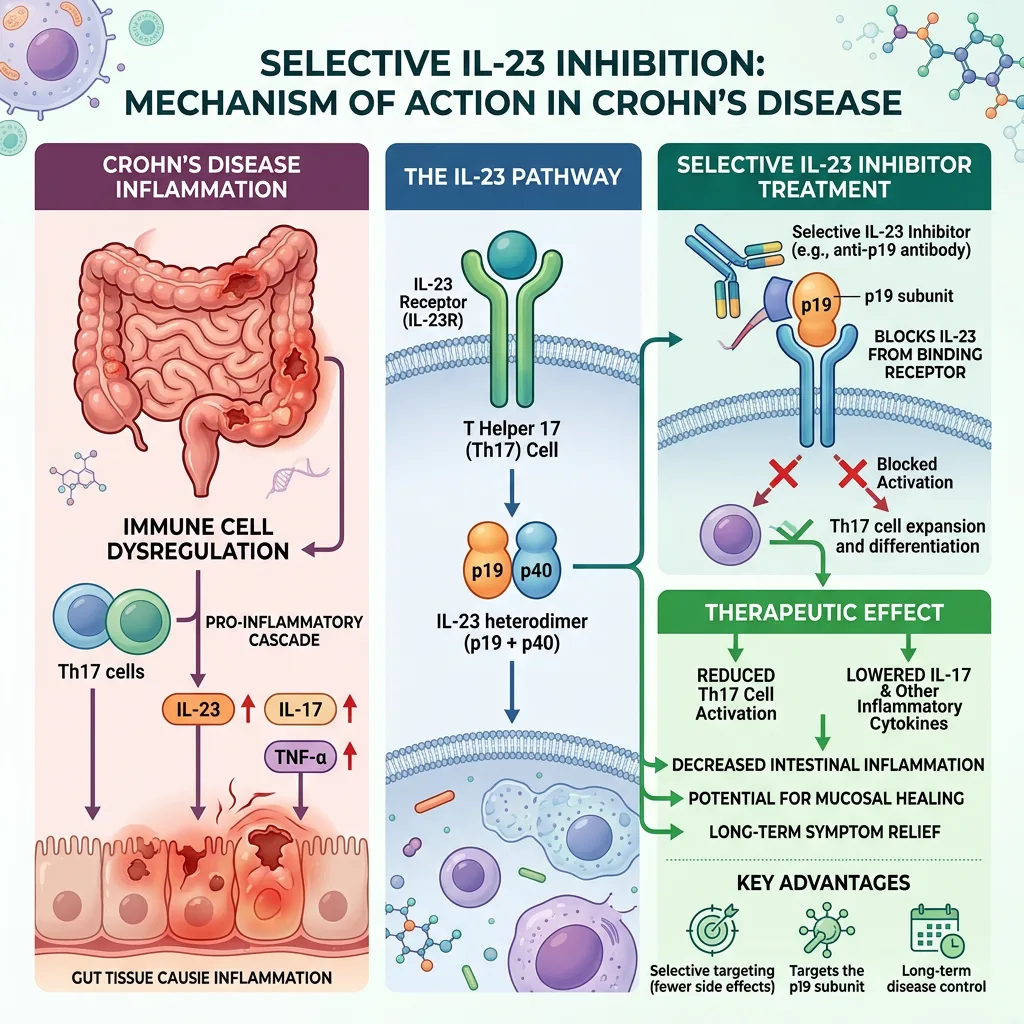
While older biologics suppress large portions of the immune system, IL-23 inhibitors act like a sniper, targeting a specific inflammatory protein (interleukin-23). Medications in this category have shown strong remission rates and promote endoscopic healing (the actual healing of the bowel lining). Because they are highly selective, they offer a favorable safety profile and are becoming a highly effective option for patients who haven’t responded well to other biologics.
3. Next-Generation JAK Inhibitors
Say goodbye to infusions. JAK inhibitors are small-molecule medications taken as an oral pill that block the Janus kinase pathways involved in immune signaling. They are known for providing rapid symptom relief and offer a convenient, needle-free alternative for managing moderate-to-severe disease.
4. Stem Cell Therapy for Tissue Repair
Stem cell research is moving out of the lab and into real-world applications. Mesenchymal stem cell (MSC) therapy is showing significant promise in repairing damaged intestinal tissue and regulating the localized immune system. It has been particularly effective in treating perianal fistulas—a notorious and difficult complication affecting up to a third of Crohn’s patients.
5. Genetic Discovery: The CARD9 Variant
In a fascinating pipeline development, researchers have designed small molecules that actually mimic a rare gene variant known to protect against inflammatory bowel disease. These molecules target the CARD9 protein, selectively blocking chronic inflammatory signaling without shutting down the immune system’s overall ability to fight off regular gut infections. While still in the early development phase, this represents a complete “genetics-to-therapeutics” roadmap for future Crohn’s treatments.
</div><span></span><div>Get Healthy Crohns on Google Play
Track food, sleep, meds and symptoms privately on your phone.
An iPhone version is currently in production.
Or get new articles and app updates by email:
I am not a doctor. This is not medical advice. Check with your care team before changing treatment, diet or supplements.