Understand Crohn’s, without the jargon.
Crohn’s is much more than a diagnosis. It’s an energy problem, a where-is-the-bathroom-everywhere worry, and a daily negotiation. Here’s what you need to know.
What is Crohn’s?
You have been told time and time again, “Crohn’s disease is a chronic inflammatory bowel disease (IBD) characterized by inflammation of the digestive, or gastrointestinal (GI), tract, collectively referring to the mouth, esophagus, stomach, small and large intestines, and anus. In fact, Crohn’s can affect any part of the GI tract, from the mouth to the anus, but it is more commonly found at the end of the small intestine (the ileum) where it joins the beginning of the large intestine (or colon).” – Crohnsandcolitis.com
Crohn’s is much more than that for most people. It is an energy problem, a where-is-the-bathroom-in-every-place problem, a worry about what’s next and what pain I will have to go through today. It means waking up every day worrying whether today is going to be a good day or a day spent in bed in pain with no relief.
This is not meant to scare you if you just found out you have Crohn’s. It is meant to tell you what you probably already know at this point.
Doctors seem to use prescription drugs to try to mask the symptoms, but the main problem is that at the end of the day you still have Crohn’s. No matter how religiously you take your meds and follow the treatment, there will be days you wake up knowing that today is a day you will have to fight for: fight to get up, fight to go to work, and fight to fake a smile so you don’t worry the people who love you.
Recognizing the signs and symptoms
The most common signs are:
Frequent, recurring diarrhea
Unexpected weight loss
Fever
Abdominal pain and cramping
Fatigue
Reduced appetite
The problem with Crohn’s is that it can affect the entire GI tract, from the mouth to the anus.
Treatments
Anti-inflammatory drugs
Immunosuppressive drugs
Infusions
Steroids
Antibiotics
Vitamins
Surgery
Treatments
So you may be asking what kinds of treatments are out there, how they affect you, and how they lower the effects of Crohn’s. Many of these treatments work by lowering the immune system’s response.
The most effective treatments right now for most people are nonsteroidal anti-inflammatory drugs, other anti-inflammatories, steroids, immunosuppressive drugs, vitamins and antibiotics. Some people can get by with just a few pills a day. Some need monthly or bimonthly infusions, and some cannot do either and have to have surgery to remove the affected area.
When I wrote this in 2018, my treatment regimen was pills once a day with an infusion every 7 weeks, a combination of two different treatment plans. Things have changed since then: my biologic stopped working and I had surgery in 2024. Your plan will be different from mine, so please talk with your own care team. I know someone who can’t take either of these and has surgery every five to ten years, depending on how bad it gets for him.
Research and news

The Future of Crohn’s Treatment: 2026 Medical Breakthroughs to Watch
Welcome back to the Healthy Crohn’s blog. Navigating Crohn’s disease often feels like chasing a moving target, but the latest advancements in gastroenterology are giving us entirely new tools to…
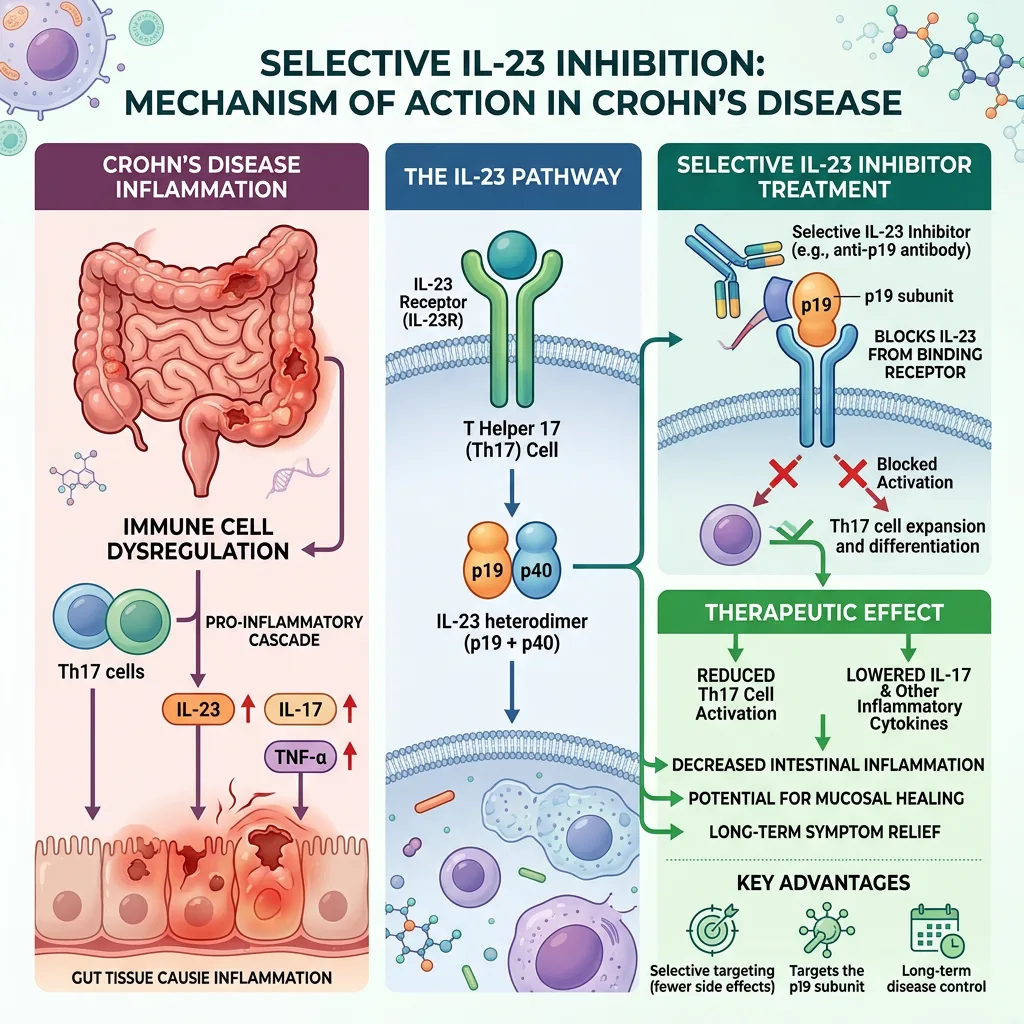
The 2026 Breakthrough in Crohn’s Treatment: Why Selective IL-23 Inhibitors are Changing the Game
If you or someone you love is managing moderately to severely active Crohn’s disease, you already know how exhausting the journey can be. Finding a treatment that brings true, long-term relief often…