Crohn’s in Kids: A Parent’s Guide to Growth, Treatment and School

If your child has just been diagnosed with Crohn’s, you probably have a head full of new words, a pile of appointments and a stomach that won’t settle either. First, a breath. This is a lot, and you are not behind.
I should be upfront: I am not a doctor, and I am not a parent. I am an adult living with Crohn’s who read the research and the Crohn’s & Colitis Foundation’s parent resources so you have a starting map. Your child’s care team knows your child. Use this to come up with questions, not to make treatment decisions. (Sources are linked at the bottom.)
Crohn’s in kids is not always “Crohn’s, but smaller”
In many children the disease shows up in more places at diagnosis. A well-known study from Scotland compared 416 children with 1,297 adults using the standard Montreal classification. The upper part of the digestive tract was involved in about half the children, and a pattern covering both the small and large bowel plus the upper tract was far more common in kids (43%) than in adults (3%).
Kids also don’t always have the “classic” symptoms. Along with belly pain and diarrhea, a child may mainly have weight loss, tiredness, or slowed growth. That is why growth gets so much attention.
Why doctors watch growth so closely
Reviews put growth failure at diagnosis at about 15% to 40% of children with Crohn’s. A few reasons stack up:
- Inflammation itself can slow growth. The signals released by an inflamed gut can interfere with normal growth.
- Not eating or absorbing enough. Pain and a poor appetite mean fewer calories and nutrients, and an inflamed gut absorbs less.
- Steroids can slow bone growth when used for long stretches, which is one reason doctors try to limit them in children.
Doctors use a treat-to-target approach in IBD, set out in the STRIDE-II recommendations, and for children the long-term goals include restoring normal growth, as well as remission and a good quality of life. Practically, this means your child’s height and weight should be tracked on a growth chart at visits, like a report card for growing. Some newer research suggests it may be less common in recent years, though the numbers vary a lot between studies. If you notice your child slowing down or losing weight, tell the doctor.
Treatment: what the options look like
Treatment depends on how severe the disease is and where it is. Here is the general picture. Your child’s team will tailor it.
Nutrition therapy
For children who haven’t finished growing, the European pediatric guidelines (ECCO/ESPGHAN) name exclusive enteral nutrition (EEN) as the first choice to bring on remission. EEN means a nutrition formula as the only food for several weeks. It gets about the same remission as steroids with a better safety profile, but it’s hard to stick to, especially for a teenager. Another option is the Crohn’s Disease Exclusion Diet with partial formula. I explain how both work, and what the research does and doesn’t show, in Crohn’s and Diet: What the Research Actually Says.
Medicines
- Steroids work quickly for flares, but the aim is to use them as little as possible in children.
- Immunomodulators are medicines that calm the immune system and are often used long-term.
- Biologics are the established advanced treatments. For children, the best-studied are the anti-TNF drugs, infliximab and adalimumab. In the main infliximab trial in children with moderate-to-severe Crohn’s (all of them also on an immunomodulator), about 88% responded by week 10 and about 59% reached remission. Some children lose response over time, and in that trial three out of four who did regained it after a higher dose or shorter gap between doses.
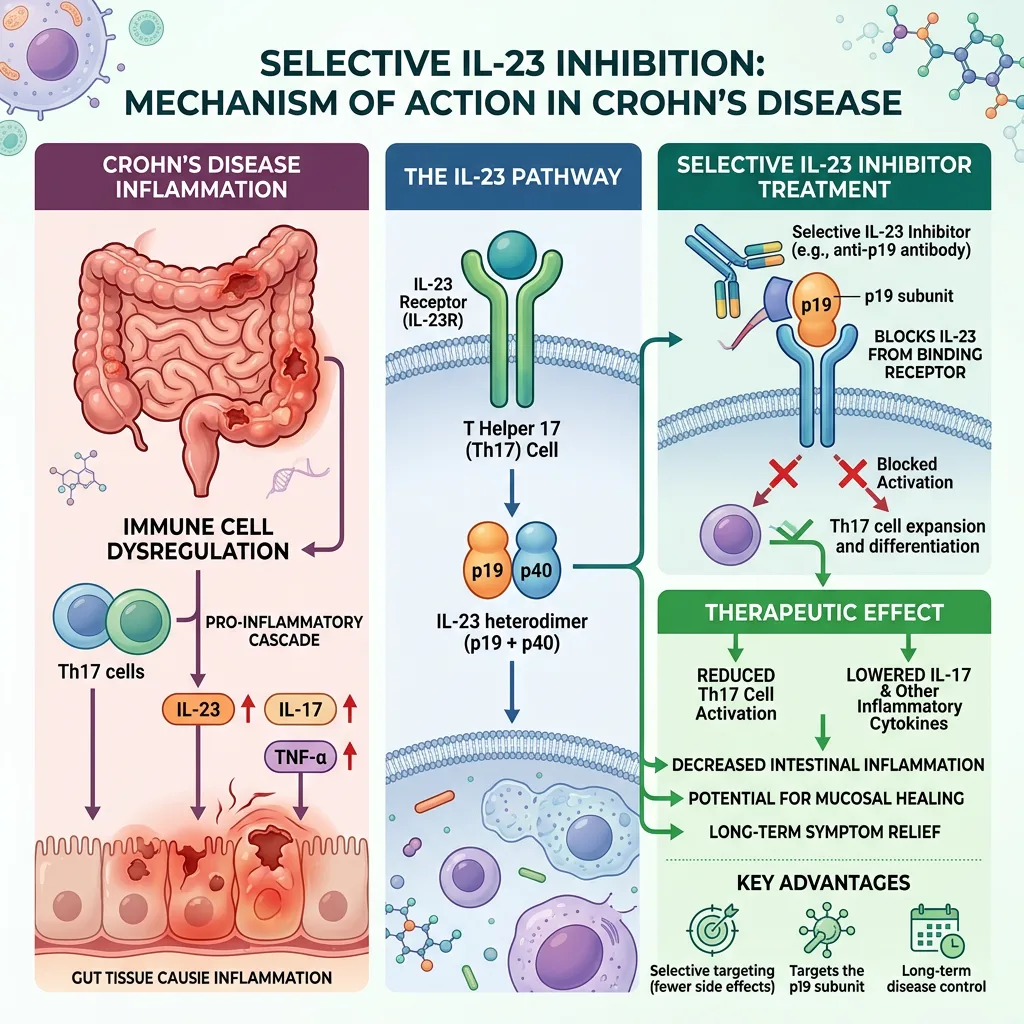
- Newer medicines are mostly studied and approved for adults. Doctors sometimes use them in children when they judge it appropriate. Ask what is approved for your child’s age right now, because this area changes quickly.
Starting stronger, sooner
The ECCO/ESPGHAN guidelines point out that some children are at higher risk of a rough course, such as those with perianal disease, narrowing (strictures) or tunneling (fistulas), or severe growth problems. For them, starting an anti-TNF drug early, along with an immunomodulator, is recommended. A newer ECCO/ESPGHAN guideline update, covering studies through 2025, recommends starting anti-TNF first for high-risk children and sticking with EEN or the exclusion diet for lower-risk cases. Ask your child’s doctor whether your child has any of these risk features, and why they chose the plan they did.
Surgery
Surgery is sometimes needed, such as for a narrowing or an abscess. It is a tool, not a failure. I’ve had surgery myself, and you can read my recovery story. The goal in children is to remove only what has to come out, to protect the bowel for the long run.
School: get a plan in place early
The Crohn’s & Colitis Foundation’s advice is simple: set up school accommodations at the start of the school year, even if your child feels well. In the US, this is usually a 504 plan. If your child already has an IEP, the IBD accommodations go into it. A 504 plan lasts a year, so it needs renewing. Your child does not have to be struggling in class to qualify.
Common accommodations include:
- An “any time” bathroom pass, with no asking permission, no escort and no penalty
- A private restroom option, such as the one in the nurse’s office, and a discreet signal with the teacher
- Seating near the door
- Stop-the-clock testing, which pauses exam time during bathroom breaks
- Make-up work and flexible attendance during flares
How to start: get a letter or documentation from your child’s IBD team, then ask for a meeting with the school’s 504 coordinator, which is often the guidance counselor. The Foundation has a template 504 plan you can bring.
Feelings matter too
Living with a condition that involves bathroom urgency, appointments and medicines can be heavy for a child. A large review of children and teens with IBD found about 16% had anxiety symptoms and about 15% had depression symptoms, with wide differences between studies, and some studies using full psychiatric interviews found higher rates. These were screening results, not diagnoses, but they tell us it is common and worth asking about.
Mention your child’s mood to the GI team, and ask whether they screen for it. A therapist who understands chronic illness can help. My post on the gut-brain connection covers what helps, and it includes a crisis line for any moment that feels dark.
Everyday things worth asking about
- Vaccines. The Foundation notes that children on immune-suppressing or biologic medicines usually shouldn’t get live-virus vaccines. Always check with the GI team before any vaccine.
- Vitamins and bones. Ask about screening for vitamin D and other deficiencies.
- Peers. Camps like Camp Oasis, local chapter groups and the Foundation’s online community can make a child feel less alone, and you too.
Growing up: the move to adult care
Over the teen years, the aim is for your child to gradually take the wheel. The Foundation suggests building these skills early:
- Describing their disease and naming their medicines and side effects
- Taking their medicines on their own
- Talking to the doctor without a parent speaking for them
- Keeping their own records and knowing why tests are done
Then comes choosing an adult gastroenterologist, ideally one who treats lots of IBD patients, and checking insurance. Young adults can stay on a parent’s plan until 26. Planning ahead helps to avoid a gap in care. The Foundation has a transition checklist and an IBD Help Center at 888-694-8872.
Questions to bring to your child’s doctor
- Is my child’s height and weight tracked on a growth chart? What is the plan if growth slows?
- Where is the disease, and does my child have any of the high-risk features?
- Why this first treatment, and what is the plan if it doesn’t work?
- How are you checking whether it is working (blood tests, stool tests, scopes)?
- How do we limit steroids?
- Which vaccines are safe, and when?
- Can you write a letter for the school’s 504 plan?
- Who do we call after hours, and when should we go to the ER?
The bottom line
A Crohn’s diagnosis changes the plan, not the person. With the right treatment, a growth chart that is being watched, and support at school, many children get back to being kids. Ask questions, write the answers down, and lean on other parents. And if you are the one holding it all together right now, my best advice is the one I give myself: slow down, one appointment at a time.
I would love to hear from parents. If something here is missing or didn’t match your experience, write to me on the contact page.
I am not a doctor, and this is not medical advice. Always talk with your child’s care team before changing treatment, diet or supplements.
Cover photo by Nátalie Rodrigues on Pexels.
Sources
- Van Limbergen et al., Definition of phenotypic characteristics of childhood-onset inflammatory bowel disease, Gastroenterology, 2008
- Growth failure: Growth failure in pediatric onset inflammatory bowel disease: mechanisms, epidemiology, and management, Translational Pediatrics, 2018, and the Cochrane review Interventions for growth failure in childhood Crohn’s disease
- STRIDE-II: Selecting therapeutic targets in inflammatory bowel disease, Gastroenterology, 2021
- ECCO/ESPGHAN: Consensus guidelines on the medical management of pediatric Crohn’s disease and the 2021 update, The medical management of paediatric Crohn’s disease: an ECCO-ESPGHAN guideline update
- Hyams et al., Induction and maintenance infliximab therapy for the treatment of moderate-to-severe Crohn’s disease in children (REACH)
- Stapersma et al., Anxiety and depression in children and adolescents with inflammatory bowel disease, Alimentary Pharmacology & Therapeutics, 2018
- Crohn’s & Colitis Foundation: Newly diagnosed: pediatrics, Setting up school accommodations, Template 504 plan, A guide for parents (PDF), Preparing for adult care
Get Healthy Crohns on Google Play
Track food, sleep, meds and symptoms privately on your phone.
An iPhone version is currently in production.
Or get new articles and app updates by email:
I am not a doctor. This is not medical advice. Check with your care team before changing treatment, diet or supplements.